
About us
Welcome to the Cassirer Center for International Scholarship and Cooperation
The Cassirer Center for International Scholarship and Cooperation is a pioneering initiative dedicated to fostering global academic exchange, research collaboration, and the study of our hyper complex intercultural world. The center is name in honor of the Wrocław born interdisciplinary renaissance person of letters Ernst Cassirer (1874-1945). We are committed to continuing in his spirit to attend to all horizons of meaning across different cultures, through which we become more humane in our care for others and find a route forward for a vibrant intercultural world.
Located at the University of Wrocław (UWr) in Poland, our center is committed to building bridges between universities and facilitating meaningful international cooperation.
Our Mission
The Cassirer Center aims to create a dynamic and inclusive environment for scholars, students, and faculty from around the world. Our mission is to promote intellectual exchange, support innovative research, and advance the study of our hyper complex intercultural world through collaborative efforts. By bringing together diverse perspectives and expertise, we strive to address global challenges and contribute to the advancement of knowledge.
Our Vision
We envision the Cassirer Center as a hub for international academic exchange and cooperation, where scholars and students can engage in transformative educational experiences. Through our programs, we seek to foster a deeper understanding of cultural diversity, encourage interdisciplinary research, and create a vibrant academic community that transcends national boundaries.
Our Programs
The Cassirer Center offers a range of programs designed to facilitate academic exchange and collaboration:
- Student Exchanges: We provide opportunities for undergraduate and MA students to participate in intensive and semester-long exchange programs in our flagship „Culture, Thought, and Humanity,” EnglishLanguage BA and MA programs, alongside exchanges at our Faculties at the University. Students from participating universities can take courses from a specially developed curriculum and immerse themselves in the academic and cultural environment of Wrocław.
- Faculty Exchanges: Faculty members from participating universities can engage in teaching and research exchanges. This includes delivering public lectures, teaching intensive „Culture Week” Seminars, and collaborating on research projects with colleagues at UWr.
- Research Initiatives: We support serious research endeavors, and are currently developing several grant projects related to the activities of the center. We have regular meetings with partner institutions to work on our research plans.
Participation
Our core group of universities includes institutions from Germany, Poland, the USA, the Czech Republic, and Lithuania. Each participating university designates a faculty member to serve as a primary liaison to the Cassirer Center, ensuring continuous and active engagement in our programs.
Our Leadership

the Director of the Cassirer Center
prof. Ilona Błocian
tel. +48 71 375 50 40
e-mail: ilona.blocian@uwr.edu.pl
Biogram
Ilona Błocian is the Director of the Cassirer Center and is a Habilitated University Professor at the Institute of Philosophy. Her main research interests are: the history of the philosophical and psychological conceptions and notions of the unconscious, philosophical and anthropological conceptions of myth, the history of myth research, symbolic thinking and the philosophy of images. She is co-founder of the Bachelard Society and the Center for Interdisciplinary Research and Philosophy of Culture (WNS, UWr) and Cassirer Center (WNS, UWr), in 2019/20 – Chairwoman of the Council of the Scientific Discipline of Philosophy at the University of Wrocław, and in 2020-2024 – Director of the Institute of Philosophy at the University of Wrocław. In 2019 and 2023, she received the 1st degree Scientific Awards of the Rector of the University of Wrocław. In 2023, she co-founded and became the Chairwoman of the Commission of Philosophical Sciences of the Polish Academy of Sciences, Wrocław Branch. Main publications: Psychoanalytic interpretations of myth. Freud, Jung, Fromm, Warsaw: Eneteia, 2011, co-ed. Myths-studies. The Contemporary presence of myth, Toruń: Adam Marszałek 2011, co-author Gaston Bachelard and the philosophies of the image. Psychological and socio-political aspects of imagery, Wrocław: Publishing House of the University of Wrocław 2018, C. G. Jung—social thought and criticism, Wrocław: Publishing House of the University of Wrocław 2018, co-ed. Contemporary Influences of C. G. Jung’s Thought, Boston-Leiden: Brill 2018, co-ed. Collective Structures of Imagination in Jungian Interpretation, Boston-Leiden: Brill 2022; Le numéro 2/2021 (2022) de la revue „Études Bachelariennes” éditée par Ilona Błocian et Marta Ples-Bęben, Bachelard et la psychanalyse, Thought and Image, “Analiza i egzystencja”, 62/2023, eds. Ilona Błocian, Karol Morawski.
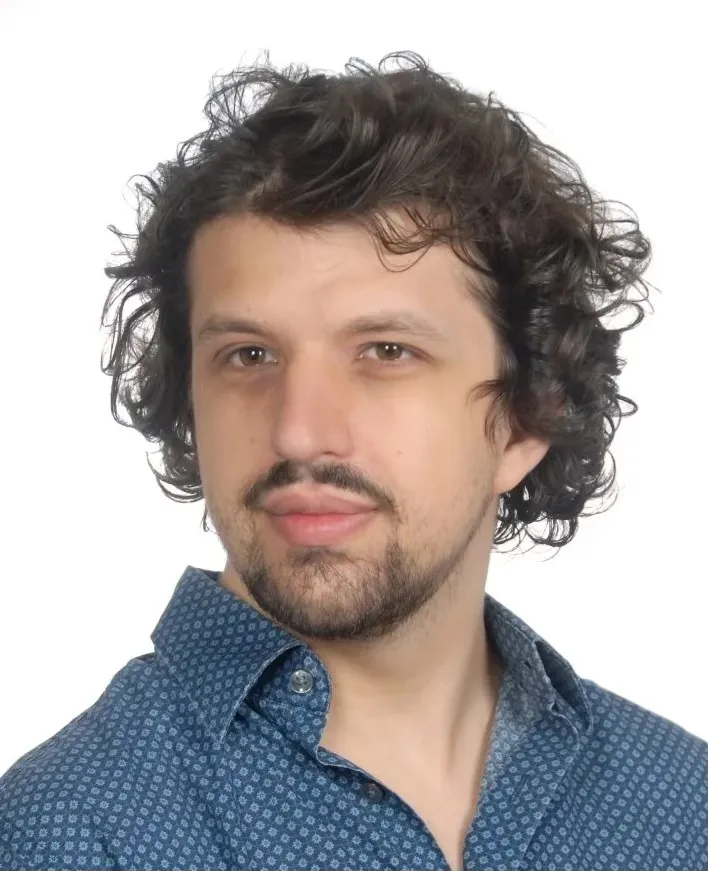
Associate Director at the Cassirer Center
prof Eli Kramer
tel. +48 71 375 52 28
e-mail:
eliorner.kramer@uwr.edu.pl
Biogram
Eli Kramer is Associate Director at the Cassirer Center and a University Professor at the Institute of Philosophy. His career so far has been devoted to studying, supporting, and networking programs and institutions devoted to philosophy as a way of life (PWL) and humane-whole person learning. His research explores the complex and at times contested relationship between traditions of PWL/holistic higher learning with the dominant institutions of higher education across the globe. He seeks to uncover relevant lessons and insights for continuing these traditions of communal/self-cultivation today. Aongside Matthew Sharpe and Michael Chase, he co-edits the Brill book series, “Philosophy as a Way of Life: Text and Studies,” which organizes new translations, as well as putting out new studies. They also closely work with Marta Faustino on a number of projects to foster philosophy as a way of life research and practice inside and out of the academy. His first single authored monograph is on the nature and role of the associated philosophical life (as distinct from philosophy as a discipline): Intercultural Modes of Philosophy, Volume One: Principles to Guide Philosophical Community (Brill, 2021). He has also co-edited and contributed to collections such as Philosophy of Culture as Theory, Method, and Way of Life: Contemporary Reflections and Applications (Brill, 2022), Rorty and Beyond (Lexington Books, 2020), and Contemporary Philosophical Proposals for the University: Toward a Philosophy of Higher Education (Palgrave Macmillan, 2018). His work has appeared (or will appear) in journals such as Eidos. A Journal for Philosophy of Culture, Contemporary Pragmatism, Dewey Studies, Philosophy and Theory in Higher Education, Studies in Pedagogy, and Syndicate Philosophy.
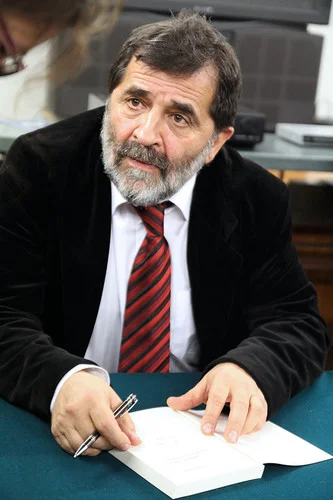
full professor at the Institute of Philosophy at the University of Wrocław
prof. Jan Krasicki
Biogram
Jan Krasicki, full professor at the Institute of Philosophy at the University of Wrocław. A graduate of Polish Philology in Wrocław, he completed his doctoral studies in philosophy at the University of Warsaw. He studies Russian, Polish and German philosophy of the 19th-21st centuries, mainly philosophical anthropology, philosophy of religion and philosophy of culture. He is the author of the following books: Eschatologia i mesjanizm. Studium światopoglądu Mariana Zdziechowskiego [Eschatology and Messianism. A Study of Marian Zdziechowski’s Worldview], Wrocław 1994; Przeciw nicości. Eseje, Kraków 2002; [Against Nothingness. Essays]; Bóg, człowiek i zło. Studium filozofii Włodzimierza Sołowjowa, Wrocław 2003 [God, Man and Evil. A Study of the Philosophy of Vladimir Solovyov], Wrocław 2003 (Russian translation: Бог, человек и зло. Исследование философии Владимира Соловьева, Москва 2009); Po „śmierci Boga”. Eseje eschatologiczne, [After the “Death of God”. Essays in Eschatology], Kraków 2011; Człowiek i Bóg w tradycji rosyjskiej, [Man and God in Russian Tradition], Kraków 2012; Bierdiajew i inni. W kręgu myśli rosyjskiego renesansu religijno-filozoficznego, [Berdyaev and Others. In the circle of thought of the Russian religious-philosophical renaissance], Warszawa 2012; Разум и Другой. Опыты по русской и европрейской мысли, Санкт-Петербугр 2015; Dostojewski i laboratorium idei, [Dostoevsky and the Laboratory of Ideas], Warszawa 2020 (Russian translation: Достоевский как лаборатория идей, Boston 2024), Porwanie Europy. Studia heterologiczne, [Kidnapping Europe. Heterological Studies], Kraków 2022. He has lectured in many European countries mainly in Germany and Russia.
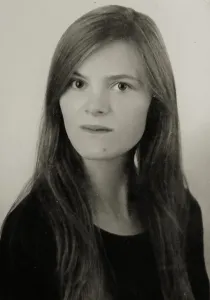
mgr Patrycja Neumann
Biogram
Patrycja Neumann, MA., is an assistant in the Department of Human Philosophy at the Institute of Philosophy, University of Wrocław. Currently she is a PhD candidate at the Institute of Philosophy, with a dissertation on „Archetype and archetypal image. The concept of archetype in the philosophy of Carl Gustav Jung’. Research includes a detailed study of the history of the development of the concept of the archetype, the most important element of C. Jung’s psychological-philosophical concept next to the collective unconscious. G. Jung’s concept of culture. I juxtaposed it with the postulates underlying J. Grotowski’s artistic and research activities. Her interests lie in philosophy of culture, philosophical anthropology and psychoanalysis. She is interested in the body and voice from the perspective of these disciplines. In addition to her academic activities, she is a performer, choreographer, and dancer. She is carrying out interdisciplinary research, capturing the unity of psyche and body through the prism of her own creative experiences.
Members
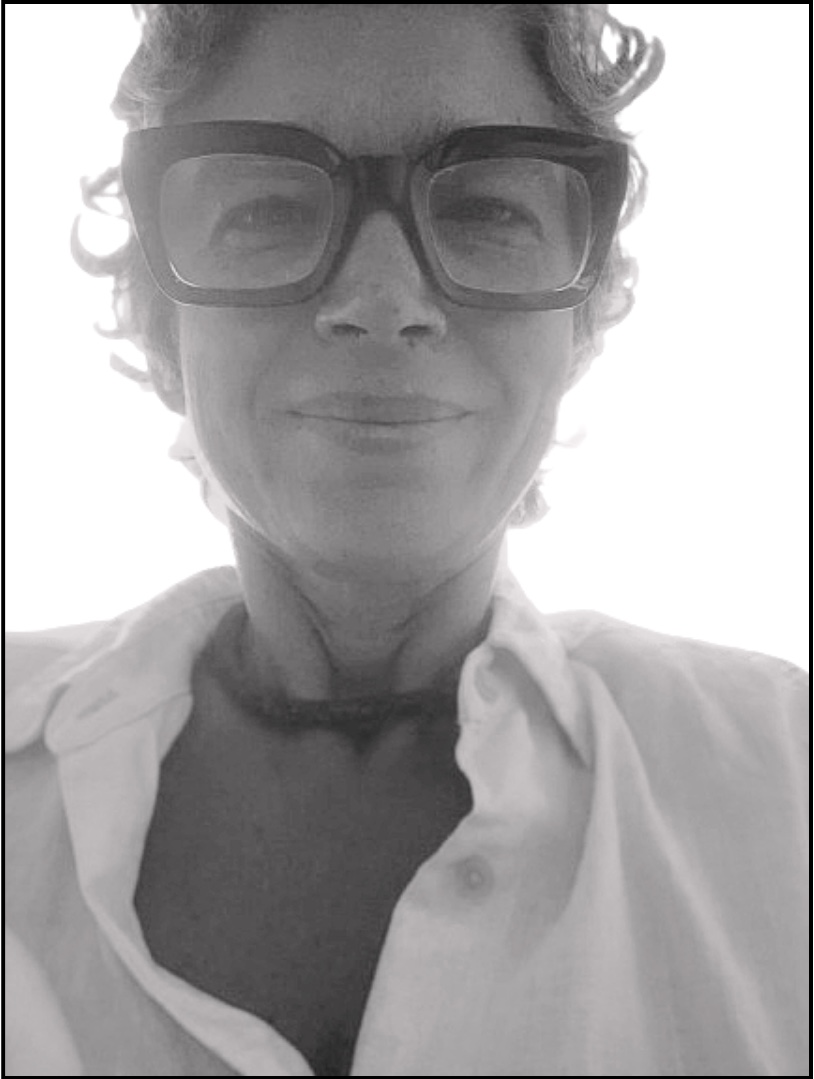
Veronica Rotondaro
Biogram
Veronica Rotondaro is an Advertiser, screenwriter, Transmedia Storytelling and Production professor at Mediax, an award-winning Film Academy reaching the Iberoamerican-wide area. She is have worked with students from Venezuela, Panamá, Costa Rica, Curaçao, República Dominicana, and Spain. She is a founding member of ABICINE (Venezuelan Cinema Guild), Somos Cultura (Cultural Association in Margarita Island), Región Insular (Think Tank, Margarita Island). She is also a Member of Transmedia Latam (Latinamerican Transmedia Creators Alliance), CNAC (Centro Nacional Autónomo de Cinematografía), VenezuelanPress (Venezuelan Journalists Association), WAWA (Worldwide Audiovisual Women´s Association) and JEVA (Venezuelan Female Filmmakers Association). She has a Master in Film Production at Universidad Alcalá de Henares, Madrid, Spain and a Master in Digital Economy, School of Industrial Organization, Madrid, Spain.
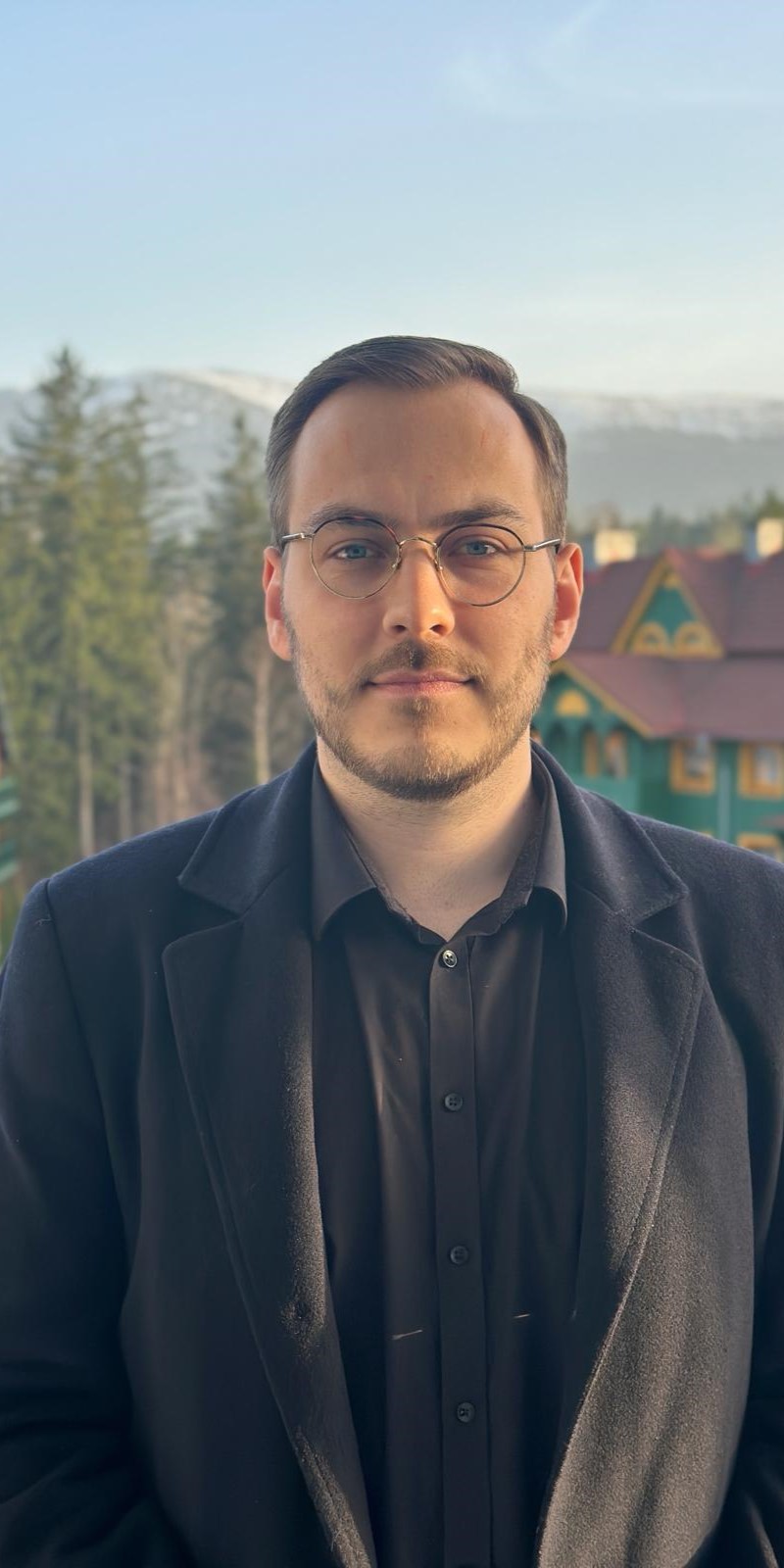
mgr Wojciech Kilian
Biogram
Wojciech Kilan, assistant and PhD candidate in the Institute of Philosophy at the University of Wrocław. Main research interests: classical ethics (Aristotelianism and Thomism), ethics of lethal actions of state, philosophy of politics, medieval Christian anthropology.
Get Involved
We invite universities, faculty, and students to join us in this exciting endeavor. By participating in our programs, you will have the opportunity to engage with a global academic community, contribute to innovative research, and experience diverse cultural perspectives.